Full disclosure: This is a version of a column that’s sat in my drafts for… probably two years or so now? Certainly the last draft is dated to at least six months ago. The reason I start there is because I can’t stress enough how this isn’t a reactionary post; it’s something that’s on my mind a lot, and that I struggle with how to word. Being autistic means that if I think too hard about wording something, it comes out stilted; if I don’t think about it enough, I fall back on a script and I usually say something I don’t intend to. Being too genuine, as well, usually opens one up to bullying and harassment, or even just unintentionally cruel comments.
But earlier today, I saw a mutual of mine say something that stuck with me. I’ll paraphrase it, since I’m fairly certain sending more attention her way is a bad idea, but essentially, in a reply thread, she said – almost casually – “I’ve never seen someone apologize for individual acts of transmisogyny, let alone participating in larger acts.” (She is transfem, in case that wasn’t clear.) Maybe I wouldn’t have stopped and heard that so clearly if I didn’t already have a growing friendship with her. Maybe I would have; like I said, this is something that’s on my mind a lot. I can’t possibly know.
But here’s the thing. I’ve been drafting apologies over and over again… and the reason I’ve always given up is ridiculous, really. I get embarrassed. I get squirmy. I get self-conscious. “Am I doing this for kudos, for attention, for a reward? For moral dessert?” It’s hard not to ask that, especially for someone like me who has Narcissistic Personality Disorder and gets accused of being manipulative all the time. It is silly, though, because it buys into the idea that standing up for trans women gets you… well, much! If that was the case, wouldn’t everybody be doing it? It’s like when people claim that accusing powerful men of sexual abuse is a surefire way to get million-dollar settlements. (Spoiler: it’s not.) And at the same time, it’s not. I care, so much, about standing up for what’s right. It’s a core part of my personality, enough that it’s affected the characters I identify with, the way I write, the choices I make about my own life – and enough, apparently, that when I’m wrong, it sticks with me longer than it should. And I’ve been wrong. A lot. Not always by accident, either. I’ve been cruel for the sake of being cruel, because when you’re at the nexus of so many intersections at once, it’s really hard to get out of the habit of assuming everybody’s out to get you, and that your only weapon is how hard you can hurt them back.
I talk a lot on social media, in my essays, etc. about how trans women have been a huge part of my life. But I need to be more honest about the fact that as much as they’ve been there for me, I was not there for them. Sure, I tried to be. I can’t be too hard on myself for the faulty decision-making of a manic-psychotic teenager. But I wasn’t, and I’m lucky that to my knowledge I haven’t lost any of them permanently, to suicide or murder – more lucky than I can ever possibly express. It’s easy to talk about how nobody’s perfect, but a lot harder to apologize. So – I am sorry. I am genuinely so sorry, because it’s taken me this long not just to be able to face the harm I’ve done, but to understand how much harm it was. I always knew; there was a reason I hated myself so much. But transitioning, finally getting to love myself properly, means that avoiding looking at myself in the mirror isn’t an option anymore. It’s a weird duality. The longer I convinced myself that I could live as a girl, after all, or that I could live in the middle ground of not transitioning but vaguely existing as Masculine, the more angry I got with those who – from my perspective – “had what I wanted”. Not all the harm is like that, either. Sometimes, of course, it’s not as simple or clear-cut as someone lashing out. Good intentions can be just as harmful; for example, the mess around Isabel Fall’s story is too much of a mess to ever be neatly untangled at this point, but the point is that someone was harmed.
I’m sure someone’s rolling their eyes and wondering why it took me so long to say anything – I mean, first off, see point one! But second of all, I try to sit back and listen. (Which sounds funny when it comes to how much I talk, but trust me, I only say about 20% of what’s in my head. Take that as you will.) Another phrase I remember, that stuck with me, was someone – another trans woman – saying that it was all well and good that people “felt bad about Isabel. But how are you going to make sure it doesn’t happen again?” And I had nothing. No response. Because I didn’t know how to make sure it didn’t. Trying to figure it out from the basis of that particular discourse alone hasn’t gotten me anything but a migraine and dissociation problems, but it’s still stuck with me. It’s not enough to take each separate controversy and go “This woman doesn’t deserve it – but the next one might!”. It’s about figuring out how to stop it from happening. And no matter my opinions on the story, or the handling of the story, or anything like that – the reason why there was such a strong response in its defense isn’t really about the story. It’s because every single transfem person has either directly experienced or seen first or secondhand the consequences of this kind of harassment. It’s an open wound that never has the chance to heal.
You’re not wrong, though. I’ve sort of – glossed over a lot and tried to let my actions do the talking. Which is a nice thought. I mean, ideally, my actions are doing a lot of talking. I have a lot of experience with unwanted and/or empty apologies; I’m nearly allergic to them at this point. Add to that the tension of how people of colour are often expected to apologize in specific ways to white people and my complicated relationship to the concept probably, well, makes sense. But taking in the real scale of the issue – that transmisogyny-exempt trans people have consistently not just left transfeminine people in the dust, but been eager and active participants in their abuse – it’s not really enough to shove my past faults in a box and try to be better while hiding the box in a corner.
So, yeah. I’ve been a fucking dick in the past. Some of it was carelessness, stuff that others might not even remember. Other parts were me buying into ideology that I no longer associate myself with. And others still were me having only part of a narrative and not taking the time to cool my heels and head and get the full picture. There are lines that I know I haven’t crossed, but at the same time, I’m not setting the bar that low. Non-toxic masculinity isn’t meant to be a version of masculinity that abdicates all responsibility. Toxic masculinity already does that. And honestly – I’m happiest with myself as a man when I’m aware of my own strength and power, not just as an “empowered” person or whatever other buzzword you use, but someone who can and has hurt people before, and who is making the choice and the effort to do otherwise.
And, uh, this is dedicated to a girl in a dorky shirt who kissed me in front of the lockers nearly 13 years ago. I should have treated you better, but I’m glad you’re with someone who does. You helped me during some of the darkest times of my life and I owe you more than stolen kisses and bittersweet memories. One day I’ll make it up to you.
Content note: this article talks about “fujoshi discourse” and both criticisms and supports of m/m ship spaces, as well as getting into homophobia, transphobia, transmisogyny and racism, some mentions of pedophilia accusations, and sexual assault/rape.I’m not capable of talking about the original or cultural meaning of ‘fujoshi’ in the appropriate depth; rather, I’m using the term primarily in the sense taken on by Western fandom concerning ‘pro-fujo’ and ‘anti-fujo’ stances, and acknowledge that that’s a separate meaning.
I’ve been in fandom for… nearly fifteen years now, depending on how you count it. My first fandom — that is, that I did with other people – was Chronicles of Narnia, in a LARP-style roleplay with my closest friends in Grade 5 and 6 that quickly expanded to include the Pellinor books, Pirates of the Caribbean, Lord of the Rings, The Last Unicorn, Edge Chronicles, and various other fantasy franchises that our sweet little autistic hearts had latched onto. My foray into the wider online world started with (excruciatingly bad) Harry Potter fanfiction; Naruto and Bleach followed soon after, but I found my feet in the Fullmetal Alchemist fandom around 2006-2007. For context, I’m 26 or so now, so I was very much a child in fandom. My interests have grown with me but stayed pretty consistent, with a few modifications here and there.
Why do I say all of this? Well, because it’s very odd seeing discussions about fandom sometimes, especially when the reliance on Old Fandom vs. New Fandom guides so many discussions. Today, most fandom discussions, including ones about the “fujoshi” community, are centered on and circulate around anti-shippers vs. pro-shippers; people who believe very strongly that there is such thing as a Bad or Evil Ship and shipping it makes you a bad person, and people who push back against that and believe that fiction is, well, fiction. For that debate, I’m squarely on the pro-ship side, but it is sometimes unnerving to realize that the entire origin of being anti-fujoshi in the first place has gotten erased.
That’s not to say that I’m particularly comfortable with the label of anti-fujo. There’s a few reasons for that, but the primary one is probably how it uses a specific label to criticize a Broad, Multifaceted Problem. The modern iteration also very strongly presumes that being “anti” means you’re willing to harass, suicide-bait, and/or dox people who don’t agree with you. Absolutely not. But this debate, like most shipping debates, had much gentler origins, and the nuance has been entirely destroyed.
So, why would anybody have a problem with m/m shippers? If you’re newer in fandom particularly, you might be kind of boggled by the idea. In response, I want to run through the actual points of the discourse, and debunk a lot of popular myths about people who are critical of m/m ship spaces.
It’s Not Really About The Shipping
Well, sometimes it is. It would be a full-on lie to pretend that there aren’t folks in fandom using anti-fujoshi talking points to defend or attack ships, and no other reason. But the reason I say this is because, between the Modern RadFem Anti-Fujoshi and pro-ship talking points pushing back on them, there’s a surprisingly prevalent idea that being uncomfortable with m/m shipping spaces necessarily means you despise everyone who ships m/m or think they shouldn’t ship it at all.
It couldn’t be further from the truth. In fact, before the rise of the Anti-Shipper, these arguments were a lot more precise, and the ones that still apply today are specifically about the Shippers, Not The Ships. That is, I don’t have any particular investment in what you ship or even how you ship it (with some exceptions), but instead in how people in those spaces think about real queer men. The end goal should never be “stop engaging in the thing”. It’s no wonder that we’ve ended up there with how anti-ship arguments lean so heavily on it, but it’s a lot simpler than that: how you talk about those ships, as contrasted to real people, matters.
This is also relevant to the “fiction = reality” arguments, because realistically, someone who writes the filthiest, smuttiest gay porn in the universe can (and often will) be absolutely excellent to other queer men outside of the fictional borders, and some of the worst homophobia I’ve ever endured comes from people who wrote “appropriate, non-fetishized” m/m ships and/or took strong anti-fujoshi stances. The difficulty is that in very much the same way that anti-shippers in general prioritize the fiction over the real people, many pro-fujoshi posts focus on how there’s nothing wrong with what they’re writing and ignore how real people feel in the face of their arguments.
Which brings me to…
2. Real People Matter… And They Determine The Bigotry, Not You
I’ve been mentioning “pro-fujoshi” arguments prety vaguely so far, but it’s necessary to be specific. I’ve seen a number of posts making the very salient point that as long as you’re treating real people with respect, what you write doesn’t matter. That’s completely true – if you actually are. A lot of folks take it for granted that they must be treating real queer men totally fine, after all, they’re not homophobes… but then push back, hard, on being told when they’re being homophobic. It’s a side effect of the increasing focus on every other part of the acronym except the G; it’s increasingly normalized to say awful things about gay men because we’re the “most privileged” members of the community. Nor is this limited to the baby radfem circles that are so often also antis. I’ve seen multiple proshippers make arguments about “men vs. queer people” that are gutting, all the more so for the fact that they don’t seem to see the problem with it. And if I never see the phrase “cishet gay man” again, it will be too soon.
It’s hard, I know, to accept that you might have been hurting someone without realizing it. But the answer isn’t to insist that you can’t possibly be bigoted, especially since you’re often putting the onus on queer men to tell you otherwise, and we can’t be sure that you’ll respond well. Let’s be honest. Why is it so normalized for fandom to be a space for AFAB people? And is it really an improvement from “fandom is for women”? (Not really, no.) I, myself, am AFAB (assigned female at birth) but the pushback on men and masculinity affects me heavily, especially since I’ve been out and presenting myself as male online since I was 15. Multiple versions of fandom discourse do touch on this… but then attribute it to a divide between transformative and collective fandoms. Moreover, it’s talked about semi-constantly how collective fandom (the standard cishet gatekeeping of ‘girl gamers’, etc.) enforces its borders, but practically verboten to discuss how transformative fandom does the same thing. Either you are accepting without much consideration that people with penises just ‘naturally’ aren’t creative, or you have to ask why and how fandom became such a restrictive space. Nor does the argument about ‘carving out space for ourselves’ hold up against this. Fandom is important for women and trans men because we so rarely see ourselves represented accurately on the screen or in books… but are you claiming that AMAB queer people don’t have the same needs? And if you don’t want to be making that claim, what are you doing to make your corner of fandom less exclusionary?
The influence of radical feminism on anti-fujoshi stances has come up plenty, not least that TERFs/radfems often claim that trans men are just ‘deluded girls’ obsessed with gay men. (This is ridiculous, obviously, and I hate that I have to underline that I don’t agree with it, but such is the state of the world right now.) But significantly less discussed – to the point of deafening silence – is how many accounts with “No TERFs welcome!” will then immediately presume that their audience is female, and then maybe add in trans men as an afterthought. TERFs’ primary targets are trans women, but if you were listen only to fandom’s version of radical feminism, one might come away with the idea that the people most at risk from radical feminism are cis women and/or AFAB non-binary folks. There is an endless amount of discussion about how “women’s” interests are degraded and disregarded, and absolutely zero about how it is infinitely more dangerous for AMAB queer people to show interest in feminine hobbies. (Nor do I lump ‘AMAB’ together thoughtlessly; the young cis gay boy trying on drag when nobody’s looking and the closeted trans woman scrawling self-insert fanfiction on the inside of her notebook exist in the same spectrum, even if their ultimate identities and more specific experiences differ.) It’s also a little frightening that it never comes up even with the amount of transmasc and otherwise AFAB trans people in fandom. One of the barriers that most trans men have to deal with is the pressure to give up those hobbies in order to pass. From “Real men don’t have stickers on their laptop” to “real men don’t care about romance novels”, the restrictions on what “masculinity” should involve affect more than just AMAB queer folks – and this shows you that, despite the change in ratios, a lot of fandom discourse is still primarily propelled by cis women.
You may already be thinking “but I didn’t do any of that”. And that’s true, but the core point is that when gay men speak up about bigotry they face, it’s still too often dismissed – often by counter-accusations of ‘misogyny’, which has been used as an attack against queer men for decades. (I return to the anti-fujoshi RadFem stance of accusing trans men of being deluded girls with ‘internalized misogyny’; it trades on exactly the same thing as the idea that gay men all hate women, that bisexual men are rapists or sluts by nature, or that drag queens are ‘mocking women’ with their outfits.) You may not intend the hurt you cause, but you owe it to others to at least listen and account for it in your view of your own world.
3. Being Trans Doesn’t Automatically Help
Another common friction point is the idea of fujoshis/slash shippers/yaoi fans/etc. (at a certain point the words truly are interchangeable) all being cis women. Flat out: that is wrong. However, it’s not any more correct to pretend that all yaoi fangirls and slash shippers are transmasc. It’s certainly a common shared experience, but let’s be a little more realistic here. Even though the modern iterations of these fandoms are more aware of transmasc experience and use different pronouns for their attendees, the fandom spaces are still run, policed and oriented around cis femininity. This is sometimes true even when nobody in a space is cis. (Especially since ‘not-cis’ and ‘transmasc’ are not synonyms.) There’s no magic button that applies when coming out, learning about yourself, etc. that teaches you how to not be bigoted; the number of transphobic transmedicalists should tell that story quite well, or even just the continued public missteps of Caitlyn Jenner, who seems to think she doesn’t “count”. But if we can account for public figures like Kalvin Garrah, Buck Angel, Blaire White, and even the (less damaging but still controversial) Natalie Wynn having ideas and platforms that punish other trans people, why should someone’s transmasc identity immediately exempt them from criticism? Certainly a lot of the experiences I’ve had have come either from other AFAB trans folks, and people who most likely have some sort of resonance with the idea whether they come out or not.
Much like how the defense of ‘you’re just being misogynistic’ isn’t a useful one for cis women, I urge other trans folks to keep in mind that fandom wasn’t built for us. We’ve always been part of its making, we’ve helped shore up the foundations, but in return, all we get is token inclusion and afterthought mentions. It doesn’t mean that your identity doesn’t matter! (The anti approach of turning a broad discussion about fandom being cis women-oriented into direct misgendering of individuals has not helped.) But being a marginalized person existing in a space doesn’t take away the fact that the norms of a space can be immensely harmful for others. In fact, the fujoshi spaces that many other trans men talk about in glowing terms had a dreadful impact on my mental health – because it didn’t seem to matter how much I tried to do otherwise, every argument supporting fujin and m/m shippers was oriented on the right to write about the Other, and not for the Other to write his own stories. This manifested (and still manifests) in a lot of strange and awful forms, including an experience where I was screamed at for ‘not understanding the discrimination’ that m/m shippers experience for Liking It When Boys Fuck, and the fact that I am in fact one of those boys didn’t seem to make any impact. (And keep in mind, too, that I’m supposedly one of the people these spaces are ‘welcoming’ to. How are AMAB queer folks treated by the same reactions? Consider that.)
4. Okay, But What Did Slash Shippers Even Do?
This is a pretty reasonable question, actually. The switch from m/m shippers being the anti-SJWs to anti-fujin as the bigoted ones feels like it happened overnight. As a result, many of the arguments people use for the more dramatic oversteps are outdated – or feel outdated, and the new versions don’t get as much focus.
But when I say ‘outdated’, it also needs to be said that one of the most aggressive abusive experiences I ever got from a slash shipper (on the basis of slash shipping) was in late 2016. That isn’t decades ago. That’s five years ago. Yaoi paddles might be gone, but the attitudes are not that old. In fact, some of the loudest pro-shipper voices are people who brag about being in fandom for ten, twenty, thirty years… and very rarely is there any acknowledgement of the actual behaviour that was occurring. (Which is a huge reason why people dismiss discussion of it.)
So let’s set the record straight. When people show hesitance around yaoi/slash spaces, it’s not because we think you’re embarrassing. It’s because being a man in fandom for a very long time has meant invasive questions about our genitalia and how we have sex, microaggressive ‘jokes’ about how being shy or effeminate means we’re a bottom, suicide-baiting and mass harassment over even the mildest of discomfort, shippers who waxed poetic about their OTPs in between posts supporting Prop 8 and fearmongering about AIDS, shippers who posted on forums about disowning their queer children, forums dedicated to hatemail and violent bashing of both female characters who got in the way and anybody who shipped half of their ship with a woman at all, comments on queer and trans-focused fanfictions about how ‘X character is a boy’ and being called the r-word for thinking they could possibly be a trans girl, assertions about feminine gay men being pathetic, slutty or ’embarrassing’, and my experience of being labelled a pedophile and slandered as an abuser for explaining why I don’t like the seme/uke trope or omegaverse. Nor is our hesitance somehow bigoted or unnecessary when there are still shippers and ship events in 2021 who exclude genderbends or trans versions of characters so m/f ships don’t get “snuck in”, or react violently to asexual and aromantic headcanons of popularly gay characters because gay masculinity is so linked to sex. It’s part of the induction into fandom, now, to be aware of the anti-ship and pro-ship camps, even if someone is brand new and obviously wouldn’t have any context. I’m of the opinion that the horrific treatment of queer men should be part of that same induction, and that it is the responsibility of people already in those fandoms to address and make up for the bigotry.
5. The Bigotry of Anti-Fujoshi Doesn’t Make Up For Yours
Anti-fujoshi stances, at least the modern ones, are pretty invariably racist. There’s a lot of white folks in these conversations, and often they assign meanings to fujoshi/fudanshi that just… aren’t part of the deal, and are completely inaccurate to ‘fujoshi’s origin as a Japanese term.
The problem is, that doesn’t mean ‘pro-fujoshi’ arguments are inherently Anti-Racist. In fact, it’s quite the opposite. I’m not Japanese, but it has disturbed me for a while how Japanese positions supporting fujin will get thousands of notes, but the equal amount of Japanese and otherwise Eastern positions expressing discomfort are left to languish. Realistically, even the idea that any one or small group of Japanese people can speak for the entire culture is racism in and of itself, and many people take the ‘fujoshi pass’ and run off without any further conceptualization or analysis. Additionally, especially since ‘fujoshi’ is essentially a synonym to slash, m/m, etc. shipping, it’s upsetting to see any and all conversation about racism in fandom spaces come down to this argument… and the everyday racism in fandom gets ignored as a result. At the end of the day, being ‘pro-fujoshi’ doesn’t stop anybody from assertions about Asian men having small dicks or being ‘auto-twinks’, nor does it do anything against how Black men, when they show up in slash ships at all, are aggressive tops or caretakers; not much else. (Star Wars fandom in particular has contributed heavily to the difficulty of these conversations.)
It’s also more than a little troubling how the racism of being ‘anti-fujoshi’ (whether someone is or not) can completely overwrite someone’s complaints. I’ve been called racist over this before, and while I’ve definitely grown to appreciate that there’s nuance to the term I wasn’t understanding at the time, it will never stop bothering me that my complaints included the oversexualization of a Latin American character, down to ‘ay papi’ jokes and calling him ‘a spicy Cuban boy’. The pro-fujoshi arguments so often orient so heavily around ‘anybody can do what they want without judgement’, and ignore that that has never been true. If you don’t fit certain analogues or ideas about how m/m shipping “should work”, you’re treated with much the same animosity as an anti-shipper, and even suggesting that more things should be an option, not fewer gets the same response. Countering stereotypes isn’t supposed to be about limiting people – it’s the exact opposite, where the freedom to write anything has to also include addressing the current norms and attitudes. (And the idea that it has to be blanket condemnation is also – bluntly – garbage. One of my most popular stories was a deliberate deconstruction of the ‘prison sex noncon’ trope and depicting it as the rape it is. If it was true that I was actually condemning this trope, I wouldn’t also have written stories with it played straight. (In fact, good deconstruction actually requires a love of and intricate knowledge of whatever you’re deconstructing.)
Ultimately, fandom should be a place where everyone gets to feel comfortable and heard. If we keep pushing the idea of it as an oasis, then we should be willing to try make it that way in reality; it seems like a rather mild thing, all things considered, to ask people to stop and remember that queer men in many varieties Exist before writing up arguments about using gay men as ‘blank slates’ to explore misogyny with. Again, I can’t stress enough how none of the things I’ve mentioned are even particularly about the stories in question. I’m not triggered and upset until I watch how people defend themselves against enemies real or imagined, and they accidentally let slip how they actually see me (or don’t) in the process. I refuse to believe that there’s no way to reclaim labels that have been used in derogatory ways without pushing and circulating the harmful ideas that made Old Fandom so unsafe for a lot of queer folks, and if anything, most of what I ask for is entrance; entrance into circles that consider that talking about their “gals” when they’ve got a transmasc friend there, or that thinking of all rapists as people with penises and vice versa, might be making real, existing people uncomfortable. I believe that very few people are doing this on purpose. I’d like to be proven right.
Please note: If you’re not reading this column while sustaining the ability to both retain your sense of humour with your tongue in your cheek, and take it seriously, you won’t get much out of it. This column discusses underage sexuality, neo-puritan/anti-sex ideology, (briefly) pedophilia, transphobia and sexual assault.
Teens are horny. This is one of those truths that somehow, everyone knows, and yet, we frequently have to reassert in the face of people desperately trying to cling to the idea that teenagers are also children. Teenagers are innocent children until they’re eighteen; the number of teen pregnancies, mononucleosis and chlamydia epidemics in schools, free condom drawers in need of replenishing in nurse’s offices and eleventh-graders caught in the backs of movie theaters is, obviously, beside the point. Sometimes, the same people will in one breath talk about how “men can’t help themselves” if teenage girls are going to wear sexy clothes at school, and then wonder why teen girls would keep wearing sexy clothing if they’re So Innocent. Clearly it’s a mistake and they don’t know what they’re doing.
At the beginning of the 2010s, it felt like we were making some progress against this. ACT-UP’s efforts during the AIDS crisis are precisely why we have free condoms all over the place (and Planned Parenthood thanks them mightily). In Ontario, we had a school curriculum go through that would begin to teach kids the essentials of sex ed as early as Grade 3, lining up with research that shows that teaching kids about sex early actually helps them identify abuse to authorities, rather than opening them up to it, as conservative pundits claim. Then, in what was both a very sudden and a retrospectively-foreshadowed collapse, it all started sliding backwards again. Doug Ford’s election in Ontario rewound all that progress, and laws like SESTA/FOSTA in the USA have shut down hundreds of sites that previously made sex work, hookup culture and pornography/erotica safer, more accessible and easier to find. Notables include the personals section of Craigslist, Backpage, the ban of NSFW content on Tumblr, and even more and more rigid censors on sites like Pornhub, XVideos, and others.
Of course, to a lot of people, this doesn’t seem that important. Porn finds a way, and what’s so bad about making sure teens can’t get to it? Maybe they should wait until they’re eighteen to bang, or get to porn. There’s all of this stuff about porn giving teens unrealistic expectations. Look what happened with Fifty Shades of Grey, after all. And fanfiction teaches horrible ideas about sex – didn’t one fanfiction use car oil as lube? No, no, far better that they be kept away from sexual content until they’re Old Enough.
For a long while, I’ve combated this on other people’s terms. “Yes, but–” “Yes, I suppose–” “Have you considered–” And frankly, I’m tired of it. So, fuck it. Let teens get off. Stop trying so hard. And here’s why:
Sex Isn’t Bad For You
This one is huge, actually. So much of this is positioned on this idea that sex is bad for you. We control access to pornography the way we do anti-depressants and cigarettes! And, counterpoint: it’s not. You can get pregnant from sex. So, give teens condoms, and access to the morning-after pill, and access to abortion clinics. And you can get STDs. So – condoms! And medical access! And good lord, we really should have PeP and PreP everywhere, shouldn’t we?
The reason we don’t is because we don’t want them having sex at all. And even besides the fact that we have these tools and these items for safe sex on hand… We don’t give teenagers enough credit. Recently, there was a big to-do about kink at Pride parades, and how teenagers being “exposed to kink” was so terrible for them. All I could think about was how I did more kinky stuff as a teenager than I have as an adult. See, teenagers don’t want to get pregnant, or AIDs, or syphilis. If you have teens educated about how these things work, they’re smart enough to go “I don’t like that. I don’t want that.” So you know what they do? They have sex in every other way possible. There’s a reason there’s a trope about Christian schoolgirls doing anal. There’s also a trope about schoolgirls sucking dick, and let’s not get into how many teenagers stumble into their love of chastity and orgasm denial, or sadomasochism, or bondage — just because they were fooling around and knew they didn’t want to do the “Real Thing”.
Of course, once you start talking about kink, you’re talking about different dangers. I definitely did a few things as a teen where I’m glad nobody got hurt. But once again, the issue isn’t the sex. (And really, just telling me How to do the things would have solved stuff pretty quickly. Google was my friend on numerous occasions.) Sex is not inherently bad for you. It’s not addictive. It’s not toxic. It’s not corrosive. So why are we so worried about teens having sex with each other? Frankly, some of the things we do let teens do – go to school high on energy drinks, drive cars, double-ride bicycles and scooters, pull all-nighters to finish homework – have significantly worse long-term effects than getting a good orgasm in here and there.
2. Even If It Was, Sex Isn’t Porn
“Yes, but they’re not only having sex with each other,” is the obvious reply to the above. And you’re correct. Once you have sexually active teenagers, you have opportunistic adults. There’s a rising trend of teenagers identifying themselves as “AAMs” (adult-attracted minors), a term usually given to them by pedophiles who are only too happy to tell them it’s somehow exceptional or strange for them to be attracted to adults. For teens reading this, by the way, it is not. It’s completely normal, and anybody who tells you otherwise is being exceedingly creepy.
But certainly teenagers having sex with adults is dangerous; I also tend to lean the direction of saying that while casual hookups with adults (for older teens) lives in a grey zone of risk, relationships are where the true danger lies. If you’re getting your rocks off with a random grown-up, it’s at least anonymous – relationships and emotional investment are where the gaps in maturity and the vulnerability come in. (To be clear, this isn’t me espousing the first. Not worth it, kids, you don’t know where he’s been. Although you can say the same for a lot of teenagers.)
But here’s the thing. A lot of this paranoia ends up circulating around the Internet… which is where that differentiation suddenly becomes pretty important. The common response from adults in NSFW spaces on the internet is “no kids, ever, period, full stop” – which I fully understand! But it somewhat elides the actual issues and harm involved, and conflates harm w/ legal issues. Teenagers viewing and enjoying porn of adults is not and should not be viewed as a boundary issue, not when we’re talking about public accounts and sexual services; it’s a boundary issue when it turns into a relationship, because either the adult is doing it with eyes open (yikes) or the teen in question has lied about their age (YIKES). It’s also a huge issue when teens start sending pics of themselves, because unintentionally or otherwise, they’re creating child pornography; this is an issue legally – under US law, they can actually be prosecuted for this – and ethically, where the nature of circulating images means they’re likely to end up in a collection by dint of being underage, whether they “look it” or not. And finally, the issues with US law mean that – horrifically – more than once, adults have been prosecuted for “supplying pornography to a minor” even when that direct relationship didn’t really exist. So the over-protectiveness and the building of a fence around this spaces makes sense. It’s entirely logical, at least from that perspective.
The issue is that in doing so, a lot of the assumptions around teens and sexual urges get reinforced, and a flip happens where the teens are often portrayed as the predators for wanting access at all; reactions of “ew gross” or calling them freaks are far more common than they should be, and the fear of Being A Predator overrides the sense of relation that people might otherwise have. It’s entirely natural for teens to seek out pornography! Curiosity, sexual urges, you name it — there’s nothing wrong with it. The laws that punish people so strongly and unfairly for what in the past amounted to teens clicking the “yes, I am 18” button and cackling behind the screen are the issue, not teenagers being… teenagers.
And both the law and the people afraid of it forget a crucial point; while things like sexting and sharing nudes blur the line, for sure, pornography is not sex. If I watch porn with someone in it, I’m not having sex with that person. If I have a private conversation with them that turns sexual, then yes, that’s a different conversation. But I’m not fucking them by watching them in a porn video. Teenagers watching porn are watching porn. And honestly, if in the moral panic, you take away teenage access to pornography, you’re really just making it more likely for them to have unsafe and early sex. (For porn’s issues, I actually did figure out what condoms were and how they worked from a latex fetish video. So, you know.)
3. Who Else Gets Hurt?
Alright, so teens are horny, but they shouldn’t fuck adults. We can agree on that.
So can you tell a teenager from an adult by looking at them?
I’m sure somebody’s saying yes. You’re also definitely wrong. Trans men frequently look far younger than our age, for one; petite women are frequently taken as younger than their age, too. Black folks are read as older, Asian folks as younger, and teens with big chests are always read as adults first.
This isn’t, to be clear, a justification for adults seeking out teenagers for sex. The issue with that is a matter of emotional maturity, and the question of “why aren’t you having sex with adults”? The very fact that teenagers are physically indistinguishable from adults in their 20s is a point against, not for this; it scuppers the idea of there being any visual or identifiable thrill based on a “teenage” body.
What does happen, however, in that in the mad rush to stop teenagers from accessing pornography at any cost, an awful lot of people get caught in the blowback. Take the above example, with adult spaces cracking down on there being any under-18 presence in their spaces. It’s good that adult spaces are taking this seriously. It’s not so good when it starts taking the form of policing what people look like; more than once, sex workers have had to go to ridiculous lengths to prove that they are, in fact, over 18 and just small-framed, or even more ridiculously, have a penchant for things like lolita fashion. Or when fandom spaces begin requiring everyone to be over 18, even for events that are partially or exclusively SFW, out of the fear that someone Might Say Something Horny. Or, horrendously, when NSFW discords and social groups start requiring ID for adults to enter and remain within the discord – at risk of, apparently, being accused of being a minor lying about their age.
The last one is one I want to dwell on for a little while, in particular because SESTA/FOSTA has made the world so much less safe for sex workers – and the world’s never been particularly safe for sex work! It’s also not particularly safe for trans people (who, statistically, are also very likely to be sex workers or at least consider it) who already have to go through the everyday trials of our IDs not matching up with “us”. It’s one thing for places like OnlyFans to require ID; that’s reasonable, if frustrating. It’s quite another for online strangers to essentially blackmail people into sharing IDs with the threat of telling everyone they’re underage if they don’t feel comfortable doing so!
Nor is it effective – even slightly. The request for ID, every time I’ve run into it, has been couched within the language of “well, we have no other option”. It loses every bit of its power the moment you recall that teenagers have been using fake IDs to drink, fuck, drive and vote since the forties. And now we have Photoshop! It’s a shockingly short-sighted requirement, one that asks adults to doxx themselves and open themselves up to harassment, spam, misgendering, and other unwanted attention… purely so a teenager doesn’t talk about sex with adults. We’re not talking about a bathhouse; nor, in the vast majority of these cases, are we talking about sexting rooms. They’re NSFW chats, where people talk about their kinks, often in relation to fantasies and fiction. Somewhere along the way, we’ve lost sight of how “bad” that actually is. Should it be avoided? Sure. Is it worth endangering everyone else to avoid? Absolutely not. Let’s get some reality checking in here.
This is without getting into how quickly someone can be accused of being a pedophile for so much as following a minor by accident on NSFW Twitter, dating someone 17 when they’re 19, or other similar things that just do not deserve the kind of vitriol they get. Every time, the people who get hurt are not the people responsible for whatever imagined harm is coming to mind. And what is that harm, anyway. See point one! Sex is not a bad and evil thing. Sex is sex.
4. Let Teens Fuck And Fuck Up
A ton of this also comes back to an essential piece of parenting advice that, in an increasingly interconnected world, is something everyone ends up needing to hear: let people make their own mistakes. Obviously, scale matters. Information matters. Always try. Tell your friend their boyfriend is a bad dude. Tell the kid you found appealing to pedophiles that they’re playing with fire. Tell your little brother that he needs an antivirus if he’s gonna keep going to weird porn sites.
But at the end of the day, if we can relax and put in the safeguards necessary, it will be okay to let teens fuck up. There is no force on earth that’s going to stop someone adolescent from making bad decisions. That’s the entire point of being a teenager. Puberty dials up the impulse part of your brain without all of those brakes and hard lessons and “FUCKSHITNO” buttons that you get from experience. But the experience is necessary. Our job as adults isn’t to take away the experiences; it’s to turn the broken legs into skinned knees. If someone gets pregnant by mistake, it’s our job to give them options beyond having their life ruined; to have things like abortion and the morning after pill on offer, and to be someone they can talk to. If someone gets involved with someone too old for them, what’s better: them being too scared to tell anyone as the situation gets worse, or them being able to turn to a friend, a parent, anyone and saying, “I made a mistake”?
The more pressure we put on teenagers to consider sex a taboo thing, to make first times some sort of Sacred, Immutable Object and pornography something to hide and be ashamed of, the more we risk the next generation having all the same hang-ups that the rest of us do. There’s no reason we should continue the tradition of lying to girls that their first times should hurt, or letting teenagers circulate myths like Glee’s infamous hot-tub pregnancy because nobody will tell them the truth. But if we continue to buy into the idea that teenage sexuality is something to fear and hide and avoid, that’s exactly what we’ll do.
So: get over it. Stop thinking that acknowledging that fourteen-year-olds hump pillows and get horny when they make out makes you a pedophile. (For one, it’s an insult to how bad pedophilia is.) Fight to let teenagers access things like sex toys and vibrators along with all the free condoms. Focus on teaching teens the actual “dos and don’ts” of online, like not getting into relationships while lying about their age and not posting nudes of themselves, rather than trying to tell them that porn will rot their brains and then being shocked when they 1. find out you lied and 2. promptly stop listening to you. And stop worrying so damn hard about if a fifteen year old sees a pair of tits online. They were probably looking for them, they’re probably enjoying them greatly, and at the end of the day, panicking about it causes far more problems than it solves. The world will still turn. The human race will continue. (With gusto, probably.) And as a bonus, the inventor of Cornflakes will be spinning in his grave.
Please note: this column discussesspoilers for a number of movies, series and books, including Black Panther, The Incredibles, Umbrella Academy (Seasons 1 and 2), Fullmetal Alchemist (2003) and (2009), the Harry Potter series and Voltron: Legendary Defender. Child abuse, abandonment, transmisogyny, genocide, anti-Blackness and anti-biracial sentiment are discussed below.
If fandom’s the most famous – or infamous – for anything, it might be its love for villains. Whether it’s Envy and Greed from Fullmetal Alchemist, Final Fantasy’s Sephiroth, Draco Malfoy and Severus Snape from Harry Potter, or (particularly in modern fandom) the Darkling of the Grishaverse, a good villain can attract a more determined fanbase than anything – or anyone – else. Of course, this also attracts some ofthe most vicious discourse in fandom; is it really Nazi apologism to think Kylo Ren is hot? But then, by contrast, is it really appropriate to be getting Dark Mark tattoos when it’s treated with the same horror as a swastika in universe? Is it excusing a villain to identify with their tragic backstory, or is it just understanding where they’re coming from? Is shipping a villain with the protagonist the same as shipping an abuser with their victim-? Usually not, but sometimes they are abuser and victim. It depends on the story.
All of this aside (and I don’t care much for most of that kind of discourse; fiction is worth discussing, but ships aren’t consistent or persistent enough to treat with the same analytic methods as a single text), it’s clear that there’s something about villains in fiction that attract a lot of attention. Certainly a lot of famous villains are queer-coded, whether intentionally or otherwise. But it’s more than that; a lot of common stories and arcs given to villains are significantly more sympathetic than they’re intended to be. This is a lot of where the tension around ‘tragic backstories’ comes from – the line between ‘excuse’ and ‘reason’, compassion vs. letting someone off the hook.
The reason this has come up again recently, although it’s a pretty consistent underlying battle, is the latest installment in Disney’s (frankly mediocre-to-terrible) “villain remakes”; Cruella, in which the gleefully evil Cruella de Vil is somehow, somehow given a tragic backstory. And it’s terrible. It is truly terrible. Setting aside the ridiculousness of the actual story – it misses a huge amount of why people bond with villains in the first place.
So, ultimately, why are we so fixated on villains, and what is it we want from these stories, that Disney and other studios so drastically misunderstand and others have tuned into so perfectly?
1. Abuse and Abandonment
I’ve already mentioned queercoding in villains, but in many ways, queercoding as a theory doesn’t go far enough. Certainly there are plenty of cackling, power-hungry villains with no sympathy to be found. But there are also an alarming, tragic amount of villains with backstories that clearly discuss abuse, abandonment, bigotry and the weight of oppression. It’s sometimes concealed behind different language, or elided behind how it’s not an “excuse” for their behaviour; but it’s present nonetheless. Here are a few examples.
Buddy Pine/Syndrome from The Incredibles.
I know, I know! Bear with me. Buddy/Syndrome is deeply unsympathetic. He’s an annoying fanboy with a parasocial attachment to a superhero and a pathological issue with rejection. It’s very easy to interpret him as a Gamergate-style chud. And at no point am I trying to excuse his actions within the movie; once you’ve got someone who’s a creep to women and happily bombs a plane with kids in it, you’ve got an excellent villain.
But I’m deeply curious about the fact that he’s a kid. Not in the main part of the movie, no – but it’s always sat strangely to me that a kid showing childlike behaviour and ending up in danger was punished for it. Where are Buddy’s parents? Where, in fact, is a single adult telling him that they are worried for him? Mr. Incredible’s had a day from hell. I can understand that – but there’s something interesting about the weight of this somehow being on Buddy, and not on those around him. Certainly the movie makes some vague overtures at how Mr. Incredible could have been kinder to him, but the movie is still implying that Buddy would “always” have grown up petty and immature, somehow. Still, at least, Buddy’s only shown as a lonely, somewhat obsessed kid. The absence of parents doesn’t indicate anything. It’s just that a very similar character also exists, with an almost identical plotline.
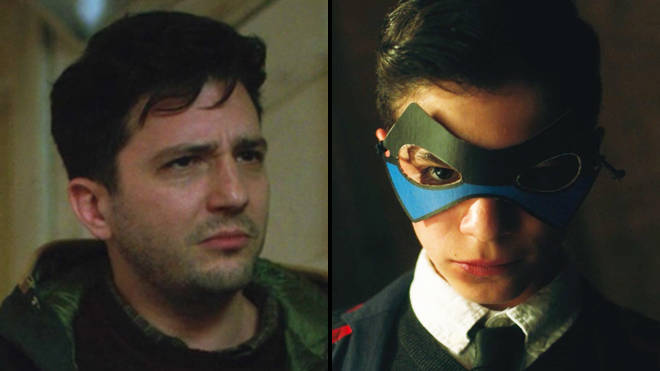
Leonard Peabody/Harold Jenkins from The Umbrella Academy (Netflix)
Leonard Peabody/Harold Jenkins has much the same plotline as Buddy, with even less sympathy. He’s humiliated by Reginald Hargreeves, without so much as the excuse of having put himself and others in danger, and we’re explicitly shown that his father is violent and abusive. He murders his own father, goes to prison – and carries out a plan for revenge, which again, within the story, tracks as him being villainous. He’s manipulative, and slimy, and hits a lot of the Gamergate-chud notes, just like Syndrome.
But why are we once again given a lonely, abused child with trauma as a villain?
Umbrella Academy is an interesting example here, too; because in the second season they do much the same thing, and then course-correct. Lila is given another option. She isn’t the problem; her abuser is. She’s done bad things; but she’s been lied to. It’s a daring choice, and it’s one that suddenly casts the villainizing of characters like Leonard and Buddy in a different light.
Of course, it can’t be denied that Leonard and Buddy have a distinct thing in common; they’re white, abled (as shown, at least) cishet men, and it’s impossible to deny that the petty grudges underscored by violence is something that plays out in real life. But they’re part of a wider pattern.
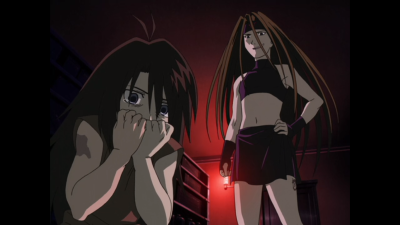
Envy and Wrath, Fullmetal Alchemist (2003)
Queercoding returns in full force when looking at anime like Fullmetal Alchemist (2003); Envy’s gender has been a source of both arguments and often-meanspirited jokes ever since its airing, and Wrath is a whole cornucopia of coding and analysis on his own. Dante is viciously abusive; she’s explicitly and vocally shown as such, but despite the show lingering on this and giving both of the above characters quite a bit of depth, neither of them truly get to break fully out of the villain role. (Wrath is arguable; but his eventual fate is all the more tragic with that in mind.) And then there’s characters like Dabi in Boku no Hero Academia; Crona in Soul Eater; Western animation provides wasted opportunities like Lotor in Voltron: Legendary Defender andAmon and Tarrlok in Avatar: Legend of Korra. The thing that binds them all is that they are victims of abuse, and that while some of them get redemption arcs, partial redemptions or are indicating possible redemptions, they begin as villains.
It’s not so much that victims of abuse can’t be villains. Nor is it that I think more of them should be redeemed, or that their redemptions aren’t good enough; it’s that I find it concerning in the first place how many of our interesting villains in the first place “become evil” because of abuse from others.
2. Good Causes, Violent Means
I’m far from the first person to point out this particular flaw in pop-culture villains; it’s certainly only grown the worse in recent years, as Hollywood tries to acknowledge the growing power of leftist movements without actually committing to supporting them, but it’s not limited to Hollywood by far. Too many villains, given the chance to be sympathetic, are positioned as having good ideas, as being right… but then going “too far”. And too often, they’re depicted as needlessly violent or otherwise acting out in a way that doesn’t make sense to back up the idea that they’re a violent extremist.
Of course, this is often done well enough for it to pass without comment. While Killmonger from Black Panther fits this, it’s also explained in the movie with such deftness that it’s hard to take too much offense to; he’s a Black revolutionary, but he also works for the CIA. He’s not a leftist going “too far”, but is on-screen identified as someone who’s been working for the enemy for a very long time. When he phrases Black liberation in terms of violence, retribution and vengeance, it’s flavoured and influenced by years of toppling governments in service of the very systems he’s condemning. In addition, the heart of what he’s protesting – Wakanda’s isolationist tendencies abandoning Black folks worldwide to the forces of colonialism – is challenged by other people than him in the movie, most notably by Nakia. However, it’s still part of a consistent problem of who we cast as our villains to begin with.
A better example from the Marvel Cinematic Universe – and the one that still pains me every time I watch the otherwise wonderful movie – is the Vulture from Spiderman: Homecoming. Toomes is sympathetic; in fact, he’s far too sympathetic. In the opening scene, we see Tony Stark and S.H.I.E.L.D. put him out of business and shove him into bankruptcy without so much as a second thought, and it’s deeply difficult to fault him for his actions. In fact, it’s so difficult that the scriptwriters had to make it so that he and his crew made weapons, something that killed people, instead of anything else that they could possibly be selling underground; and even then, Toomes’s desperation makes that hard to condemn. (Not impossible. But difficult!) The only thing that saves the movie from being a near-Villain Protagonist is that Toomes gives a speech about being the underdog while clearly having more money at that point than he’s ever had, with a nice house, a nice car, etc. But the artifice of it, while Stark flies around in multi-billion-dollar suits he doesn’t even have to be inside to fly, is startling, and all the more upsetting when ideologically, you’d expect the usually-struggling Spiderman to have at least some sympathy for Toomes instead.
You see this all over the place, handled with more or less grace; the League of Villains in BNHA, Scar in Fullmetal Alchemist: Brotherhood, and even characters like Lord Asriel and Marisa Coulter from His Dark Materials, or Captain Nemo from 20,000 Leagues Under The Sea. Some of these examples are particularly tricky, because they are good depictions of extremists of their type; Lord Asriel and Marisa Coulter in particular are embroiled in a religious/church war, which aren’t known for being particularly nuanced and free of bystander violence. Instead, though, I want to draw attention to the sheer frequency of the “well-intentioned extremist” character and how often they exist in narratives where the non-extremist version of the good intentions on display either don’t make an appearance or are such a watered-down version that it misses the point of the extremist character’s anger at all.
Consider, for example, Scar in Fullmetal Alchemist. He makes an excellent example, because Fullmetal Alchemist has two animated adaptations; one that was created in 2003 that diverged heavily from the source material, and one that was made in 2009 and remained closer to it. Before anything else, it’s a common misconception that Japanese shows and animators “don’t have any investment in” or wouldn’t be making commentary on American or other world events; quite the contrary. Japan is full of American military bases, and things like the Gulf War, Iraq, etc. may have been less talked about, but certainly were part of the conversation. So, Scar. The base concept of him as a character is that he’s a survivor of a genocide against his people, the Ishvalans; in the manga, they’re based explicitly off the indigenous Ainu people. In retaliation, Scar sets out to systematically murder the State Alchemists, essentially human weapons, who killed his people.
Neither series beats around the bush that Scar is dangerous, and that Scar is in the wrong. There’s no forgiveness for murder happening. However, the first show does something very interesting with his character arc; while he never really stops being a killer or an extremist, he’s put in context. We see Ishvalans who disagree with him, even as he defends refugee camps from attacks; we see him forced back into violence-as-defense against Amestrian soldiers again and again, and even his last moments are both an act of horrifying violence and an act of saving countless lives in the long-term (the Liorans) and a single one from immediate danger (Alphonse). By contrast, the manga and the 2009 series take a different tack, where he instead learns that violence is wrong – from, frustratingly, Amestrians and one Ishvalan in particular who “wasn’t involved” in the genocide. It’s hammered in instead that he never should have done it and how his response was always the wrong one; the refugee camps aren’t focused on or really mentioned, and we’re not given nearly as much context for why he ends up at his “extremist” position. He’s an (anti-)villain in both, but the positioning is hugely different.
Of course, both of these still fulfill what we really want from stories; we want them to be engaging. We want them to be good to read.
3. Bad vs. Good [Anything, Really]
I’m loath, at any point, to bring up Voltron: Legendary Defender – in part because both the show and the fandom feel like fever-dreams or distant memories. But when we’re discussing villains and heroes, obviously, the concept of the ‘foil’ has to come up. The foil is a wonderful literary device, in which two characters are similar in some ways and different in others; mirrors and parallels, opposites, and excellent contrasts. There are good ways to do this. There are also exceedingly, terribly, horrible ways.
One of the good ways to do this is in, say, Netflix’s Lupin; Youssef Guédira is a foil to Commissioner Dumont in ways that end up converging beautifully by the end of Part Two. The bad way is, tragically, framed in VLD’s treatment of Prince Lotor and Keith. We’re intended to see them as foils from the beginning – half-Galra, lonely, struggling to prove themselves, and with interesting relationships with both Allura and Shiro. Opinions… differ, drastically, on Lotor and Keith’s treatment throughout the show, but most people can agree that Lotor got the short end of the stick (down to a pretty horrifying demise).
Where it really gets bad is finding out that the showrunners explicitly compared Keith and Lotor as the “good” and “bad” mixed-race child. (Which, by the way, don’t do this, ever, please.) What made Keith a compelling but sometimes-confusing character was recycled to make Lotor a sympathetic but back-stabbing villain; shock value, essentially, in how you “thought” a mixed-race kid Could Be Good, But Alas.
As always, I adore sympathetic villains… but Lotor should not have been a villain. It’s not as a villain that I liked his pitched character; it’s not as a villain that he appealed to so many fans of the show. In fact, he was barely set up as a villain at all, and it’s a chilling indicator of exactly where villain discourse often goes wrong that so many people take his sudden switch to villainy at face value. Within the setting of VLD, we can analyze Lotor’s actions and choices as the actions of a person – but as a story, it needs to be severely questioned how the literary device of a foil can give way to some truly awful tokenization and myths about “divided loyalties”.
Other series fall into this trap, albeit in other, more subtle ways. FMA 03 makes a reappearance with this trope, where Envy is set up as the “bad” abandoned child versus Edward… for, it would seem, very little reason other than that Ed remained human and that Envy didn’t. As opposed to the above example, FMA03 struggles with this trope to some degree – it never seems quite comfortable with what to do with the homunculi after giving them so much depth – but it ultimately follows the dictates of its genre, to (in my opinion) its detriment. And again, the Harry Potter books use it; the entire device around the ‘Half-Blood Prince’ is that it can apply to three different characters – Severus Snape, Voldemort/Tom Riddle, and Harry himself. Why, though? Why the focus on Voldemort and Snape as half-blood, in contrast to Harry, when the message is intended to be that the bloodline doesn’t matter?
Harry Potter, however, does at least one thing that the other mentioned franchises don’t; at least it comes up. Lord of the Rings has the same trope and the same resolution, where it is at least important that Frodo and Gollum have a shared heritage, something that comes up and is part of how they connect. In Voltron and FMA, and a lot of other media, the information’s there to create the sense of comparison – and then never dwelt on much at all.
Of course, the sense of comparison usually isn’t there for the characters. All of these are there for readers, to create an enjoyable story that will draw people in and give them a sense of escape, closure, etc. Which brings me to the central point–
3. Why Aren’t They The Heroes?
Queercoded villains, abuse survivors, “well-intentioned extremists”, etc… They make wonderful characters, for sure.
So why aren’t they the heroes?
“Hero”, for a lot of people, still has some sort of moral or ethical implication. Protagonist has slightly less of one, and certainly I could use protagonist and antagonist here instead. But that would open the gate to the questions of villain protagonists, and stories with no clear right or wrong, and grimdark, and a thousand other discussions, when there’s something instead very specific I want to ask:
What is so wrong with any of these people being heroes?
You see it in fanfiction all the time; certainly the redemption arcs, yes, but even more simply, stories where the favourite characters are given a heroic role just because. There’s plenty to say about the concept of “woobifying” a villain. There’s just as much to ask about what people want from heroes that they’re not getting. It’s too easy to boil it down to “more queer heroes! more redemption arcs!” without engaging with the villains themselves; it’s nice and easy to brush off one character or another as “well, those fans are just silly, or ignoring that he’s a Nazi or a murderer“.
The truth is – how many of our heroes are just as bad? Aragorn son of Arathorn is wonderful; I love him. He’s also the surviving member of an inherited monarchy, re-establishing that monarchy, and who knows what he’s actually like as a ruler? Elric of Melniboné is one of the most lasting influences on modern fantasy and is quite deliberately a terrible person. We’ll happily play along with The Punisher or Law and Order: SVU, or even the more questionable moments of Brooklyn 99, because these are our heroes, and they’re presented to us as such. So who actually decides who our villains are?
Marginalization is a huge part of it – marginalization, and the othering of abuse as something that happens to Other People. “Good” abuse survivors can be heroes, and even somewhat morally grey ones; ones who kill their fathers with hammers, never. If you’re really lucky, trans people can be heroes in YA novels if they’re squeaky clean and well-behaved, transitioning in specific ways, and fitting a model; “uncategorizably queer” characters are still more likely to be villains than not, especially if they’re intended to be read as men. (Which in the case of transmisogynistic depictions is, unfortunately, usually the case.) BIPOC who either aren’t traumatized by racism or who are Nice To White People and never snarky beyond cute, accessible jokes can still be heroes; angry ones with trauma of their own are still going to be cast as extremists who “have good points” but “should be a little softer-spoken”.
What’s the real difference between, say, Enji Todoroki and Envy? Orphan Black’s Sarah and Helena? What makes one character worth following and another only worthy of being a good Antagonist and never a central character? Plenty of villains make wonderful, cackling villains on their own – but it’s worth thinking about, when we start defending or thinking about villains in general, which ones we love because they’re villains, and which ones we love despite it.
TW: This column discusses suicide, ableist harassment, and stigma against mental illness, suicideand particularly personality disorders like BPD.
Fandom’s got its issues; we all know this. It’s about as obvious a statement as “Star Wars has robots” or “The Reagan administration was bigoted”. But there’s an unwillingness in fandom to challenge some of its more deeply held understandings; while discussions in fandom about content go on every day, fandom social dynamics are only recently starting to be unpacked on a broader scale.
Some of this is about just the times we live in; some of it’s also personal perspective. If there was unpacking and social discussion happening in the nineties, I didn’t see it and I don’t know much about it! (And I’d be curious to hear about it, but regardless.) But one thing that I really want to revisit as a taken-for-granted idea in fandom circles is the idea of pseudicide. Pseudicide or pseuicide, chronicled on Fanlore, is very simply the act of faking your own death online. Usually this is through a suicide attempt/note; sometimes it’s through a long and painful death, or a sudden car accident. The name itself is a pun on ‘pseudo’, but it’s also a reference to how it can be used to “retire a persona which has come under unwanted attention and/or wank”.
First of all, this reflects an absolutely garbage understanding of mental health. It’s not that people don’t fake their own deaths. It happens, and you’re not going to see me going to bat for Thanfiction any time soon. But as somebody who has both experienced extreme mental health crises and does major activism around major mental illness, it makes me a little sick to my stomach that this is… the extent of the article on pseudicide. Because I’m sure everybody who’s been in fandom for a while has seen someone accused of this. You fake your own suicide for attention, or to get people off your back, or to make the problems Go Away, and you’re home free! Right?
It literally never works like that.
Please consider it from this angle; the ‘unwanted attention/wank’ as chronicled in the Fanlore article is being called by a lovely, neutral name, but usually, this means harassment. It might be the more direct harassment we’re used to talking about – death threats, spamming mentions, reblogs, anon hate, etc. Or it might be the more subtle kind. Social exclusion. Mysterious dropping from exchanges. No one claiming work on events when they used to, or nobody talking to you on fandom servers. This is a type of harassment and bullying that wreaks havoc on particularly people with existing neurodivergence or mental illness, because you can’t be sure that you’re actually noticing anything. Mistakes happen, right? And sometimes people miss things on Discords. It’s just like that. You just can’t be sure. You never know what people are saying behind your back. And there’s also a presumption that often takes place that people know when they’ve stirred up massive amounts of fandom wank; certainly it’s very common that there’s huge amounts of discussion about a fic or an event or an individual that never reaches them until it’s too late.
So immediately, the framing of pseudicide not just on Fanlore but in fandom communities has a major weak point where it’s seen as an escape button from something of the person’s own devising, rather than a response to harassment or bullying. The moment it’s reframed as the second, suddenly it seems… just as likely that somebody actually attempts suicide. Take a recent incident, for example; a 15 year old targeted for harassment over an NSFW gore/horror RPF fic attempted (and possibly succeeded; there’s been no word since) suicide in response. In this case, nobody accused the kid in question of pseudicide. But what’s the difference? (And while she wasn’t accused of pseudicide, certainly others were accused of using her death for fandom drama, so there isn’t too much faith to be had in humans there.)
Secondly, possibly the most dangerous assumption in this is the idea that when somebody attempts suicide, people immediately stop whatever they’re doing to comfort them. That it’s an immediate off-switch for whatever harassment or Valid Criticism they may be receiving, and they’ll immediately look like the victim. This is such an ingrained idea, in fact, that people will double down and dig in their heels exclusively to “counteract” this supposed idea. This has absolutely no bearing in reality. While I hear about this theoretically happening, I actually don’t think I’ve ever once been witness to a situation where somebody’s suicide, attempted suicide, or even professed suicidal thoughts bent the situation to their favour at all.
“But Elliott,” I can already hear the response- “people only accuse others of pseudicide if there’s a lot of proof.” So, here’s the other problem. Not only is this not true anyway, people have no idea what suicidality looks like. I’ve been blatantly and repeatedly accused of pseudicide, despite being exceedingly honest about my own mental health and suicidality. The main factor largely appears to be that I attempted more than once in a short span of time… because to people who aren’t chronically suicidal, this is a Sign Of A Liar. The second factor is that I was suddenly “normal” and “fine” again in between these attempts. Except… these are both bang-on, by-the-book, stereotypical symptoms of BPD (Borderline Personality Disorder). It’s literally what got me diagnosed. The fact that people on the Internet want to decide whether or not somebody else is faking suicide based on their flimsy and lacking understanding of mental health is abysmal as-is, but when the “signs of faking” are based on one of the disorders that is actually at highest risk for death by suicide, it’s all the worse.
It’s even more notable when there’s very little taken into account for what would actually prompt somebody to fake their own death. Because people do do this. Victoria Bitter/Thanfiction did so in order to avoid legal action and – notably – faked her death to her own parents. This wasn’t a suicide note left on Tumblr; this was a planned-out and executed event both on and offline. It’s also a common issue when abusive partners threaten suicide attempts to keep their victims close, out of fear that their abuser will go through with a suicide and it’ll be “their fault”. But in these cases, there’s a very clear aim at play. Simply escaping an inescapable situation is… well, uh, a common prompt for suicide, period. That’s what motivates a massive number of suicidal people to begin with, so if your reason for suggesting that somebody “faked” a suicide is that they felt trapped, you probably don’t know the first thing about suicide. It’s also a good sign that somebody didn’t fake it if they come back, try to clean up the mess and go about their day; if they’re embarrassed, trying to hide it, or otherwise trying to ignore it, then it wasn’t for attention, because they’re not looking for attention. Mental breakdowns are humiliating. They shouldn’t be; but frequently, they are, and the last thing we want to do is answer everybody’s concerns when we’re stinging both from the fact that we felt horrible enough to try, and the mixed relief and upset that we didn’t succeed. (Being suicidal sucks, is the point.)
Finally, if somebody does fake their own death, and you find them elsewhere on the internet, and you’re fairly sure it’s them…
Ask yourself first if they’re doing anything bad. Because mental illness can also mean we fake something to get away from what’s upsetting us, or to get out of a bad situation without actually trying to kill ourselves, and then go try to reinvent ourselves. If somebody’s up to the same shit or doing something actually wrong, then sure. Call it out. But sometimes, I see the impulse to call people out on just… existing. The worst thing that somebody’s done wrong in those cases is worry a lot of people and upset them, and that’s bad, of course – but it’s not anything that can get fixed by yelling at them months or years after the fact. If you weren’t close to them, leave it alone.
Pseudicide is a word that – ironically – I wish would die. It describes a concept, sure – but people have gotten awfully comfortable describing any instance of suicide or suicidality that doesn’t describe their narrow view of “suitable” mental illness as it, and it’s made life difficult for far too many mentally ill people. It shouldn’t be more dangerous for people to express that they’re suicidal than to keep it to themselves; and if fandom’s so accepting and open for marginalized people (it’s not) then why do we have a word for people who “fake their own suicide” but not ay acknowledgement of people who abuse and harass the mentally ill because they can get away with it?
The least I can ask is that the next time you’re in a situation or a social group where people are starting to raise the idea of a faked suicide, consider being the voice that suggests otherwise. That we don’t know what’s happening in somebody’s life – and that even if you or your group don’t have it in you to be actively compassionate, it costs you nothing to step back, stay out of it, and not make it worse.

 Elliott Dunstan